Monday, October 30, 2017


letters@scmp.com

I refer to Alex Lo's October 23rd's article titled 'Policies on HK are more forward-looking" where he states "US President Donald Trump's unexpected victory has been a godsend. It exposes the unreliability and irresponsibility of a democratic society".  Actually, Trump's election does not do such a thing at all. Quite the contrary, it shows that through the electoral system, democracy has lots of checks and balance which makes it incredibly hard for Trump to push the most radical parts of his agenda. Something that would not happen in China as we see Jinping giving himself unchecked powers.

Actually, Democracy has been the most stable political system since the industrial revolution; a system most adapted to balance the need economic growth, and popular desires.

This is what the autocrats such as Mr Lo fail to understand about democracy: it trades short-term "disorder" for long-term stability, while dictatorships are orderly through force in the short-run and invariably finish in revolutions of the people.
JC Clement


The original article from South China Morning Post:
http://www.scmp.com/comment/insight-opinion/article/2116517/policies-hong-kong-are-more-forward-looking 

"Policies on Hong Kong are more forward-looking

Xi Jinping’s speech was without the warnings given by Hu Jintao against “external forces” and the need for a “grand united front”. Instead the focus was on long-term stability and prosperity

Critics of China will beg to differ but the policies of the central government annunciated by President Xi Jinping towards Hong Kong during the 19th national congress have been much more positive and forward-looking.
Gone are the warnings against “external forces” and the need for a “grand united front” in the speech given by then retiring president Hu Jintao at the 18th congress. Instead the focus is on long-term stability and prosperity, with such initiatives as the economic development of the Greater Bay Area of Guangdong, Hong Kong and Macau.
Concerns about foreign interference cumulated with the Occupy protests of 2014. But as the so-called yellow umbrella movement dies down, so too have fears about political intervention by foreign forces.
Meanwhile, the split within the loyalist camp between the so-called Leung gang (named after ex-chief executive Leung Chun-ying) and the Tang camp (after Henry Tang Ying-yen, his defeated electoral rival) has been mended under pressure from Beijing.

The tone of the central government today is much more confident and assertive. No wonder; after the debacle of the city’s failed electoral reform, Beijing has essentially forced all the major Western governments to concede that Hong Kong is solely a matter of China’s internal affairs. Besides lip service, no Western government will stand up for autonomy claims made by the local opposition.
US President Donald Trump’s unexpected victory has been a godsend. It exposes the unreliability and irresponsibility of a democratic society. As the most unprepared and inexperienced president in post-war US history, Trump makes Xi look like a world-class statesman.
No Western country can take a meaningful stance against China without US backing, not even Britain, now deeply mired in Brexit. And over Hong Kong, there is virtually no hope or incentive for them.

So all the noises being made about Hong Kong by busybodies, usually from the US and Britain, are just that – noises. Tory activist Benedict Rogers being barred from entering Hong Kong? Good for a few news headlines. The report by the US Congressional-Executive Commission on China on “the long-term viability of ‘one country, two systems’? Nobody reads it. Marco Rubio, who?
Hong Kong has a great future when it can sort out a workable and amiable relationship with the rest of the country. Its opposition camp just needs to stop all that self-destructive foolishness thinking it can buddy with Western governments to put pressure on Beijing."

Saturday, June 24, 2017

(Hong Kong) Misguided policy on Electric Vehicle


To Carrie Lam (mostly),

    I would like to react to the unfortunate decision of stopping the new car registration tax credit for EV (Electric Vehicles). While many have rightfully commented on how unadvisable this action from the prior administration was, I thought appropriate to support these comments with factual evidences, then, suggest better ways to achieve the goal of stabilizing or even reducing the ratio of private car to driving population in Hong Kong.

First, let’s take a look at the statistics for pre-EV tax-credits below:

Inline images 1
New private car registration 1981-1997 (above). Pre-EV tax credit (1997). Observe the trend-line.

Inline images 2
Then, let’s observe the new car registration 1997-2017 above, with the EV tax credit in effect. Note that the new car registration is actually growing at a slower pace. Provided there was no significant competitor in the EV market before the past 4 years, let’s not draw a final conclusion quite yet. However, this is certainly an indication that the long term trend does not support the action taken by the previous administration and that it couldn’t have been rooted in a serious analysis.


Inline images 3Src: https://qz.com/917491/hong-kongs-love-affair-with-tesla-tsla-vehicles-looks-set-to-grind-to-a-halt/
Now let’s observe the Tesla influence on new EV car registration (above). There was a huge pick-up from 2014, about a year into the Tesla model S introduction in Hong Kong. Understandably enough as Tesla introduced a luxury, high performance sedan car, which directly competes with the most popular brands sold in Hong Kong.
Now, did that correlate to a spike in new car registrations?

Inline images 4
Resounding no as the chart above shows! For the same period, for all new car registrations, no spike in the overall private car sales. Obviously, what happened is that Tesla EVs displaced non-EV luxury cars, as evidenced in the private car sales figures for April 2017, which are back to usual numbers, while Tesla have not sold any…
Now, there you have it, a policy not guided by facts, but then, what was the driver? Could it be the European luxury car makers’ lobby’s influence? Who knows…
In any case, this policy error can be repaired easily and efficiently. So, how would the new Hong Kong administration act to slow-down progression of private car sales?
In his June 18th piece for the SCMP, Mike Rowse suggests to cap the number of private vehicle. Maybe we’ll need to get there eventually. However, I think that the current issue has to do with insufficient tax de-incentives. There are many ways for the new administration to tax the private cars appropriately:
·         Have a hefty, non-creditable base tax
·         Double the current taxes, with half being modulated to the vehicles emissions (ie. No emissions, only a single instance of full taxes, and progress from there to double the taxes as level of car emissions increase). There is ample research available on the efficiency of such feebate scheme
·         Additional taxes on private car ownership, again modulated on emissions
Where there is a will, there is a way. Now, it is the core issue, isn’t it? What exactly is the will?

JC Clement
Jordan, Hong Kong


Sent to: ceo@ceo.gov.hk (Carrie Lam), letters@scmp.com, paul@designinghongkong.com (Paul Zimmerman), mike@rowse.com.hk (Mike Rowse) on June 25th, 2017

Updated 2017-DEC-21: 


Now that a few months have past, we can check if the government’s assumption that reducing the EV incentives would reduce the car purchases, we can clearly see that it has not been the case at all: http://www.td.gov.hk/filemanager/en/content_281/table41a.pdf

If we extrapolate November and December 2017 with the monthly average of 2017, we can see that 2017 is going to be just over 38,000 new private cars. More than 2016. This confirms that the policy or discontinuing the EV first registration rebate has been a complete failure and will have resulted in more street-level pollution.


Basically, I took the government numbers and compared the same period in 2016, then after the end of the rebate in 2017, for the most popular car brands. It is quite clear that what happened is that Tesla candidate buyers just shifted and bought a BMW instead. Again, proving the total policy failure.

I
f the government really wants to do something about abating the unchecked growth of private cars. Taxes them to death. And re-introduce the EV registration discounts so that new vehicles are cleaner.


Friday, May 12, 2017

Fake news

Neil deGrasse Tyson was on the 'Hot Ones' show where he explained the universe while eating spicy wings. Funny premise which has led to him saying what I believe should be a quote for the ages. Read and integrate this deeply for the implications are critical:

Host: "Over the last 10 years or so, have you seen an increase in the number of people maybe think these things (bunk crazy ideas)?"
N.D.T: "I think that number of people may be the same over time. They just now, can write a blog that the whole world has access to via a search engine. You'd be alone with your own view that has no correspondence to objective reality. And you type it in to a Google search, and it'll find every other person like you, who think the same way, giving you the false sense that you're actually onto something, that you have some deep insight into the world that no-one else has. This is delusional. The Internet landed in our laps without creating a curriculum that empowers you to know when someone online is full of shit."

Check-out the whole thing here: https://youtu.be/Da8-QfGemgo

DON’T WANT TO FALL FOR FAKE NEWS? DON’T BE LAZY

"Huckabee Sanders shared an altered video of a press briefing with Donald Trump, in which CNN reporter Jim Acosta's hand makes brief contact with the arm of a White House Intern. The clip is of low quality and edited to dramatize the original footage; it's presented out of context, without sound, at slow speed with a close-crop zoom, and contains additional frames that appear to emphasize Acosta's contact with the intern.

And yet, in spite of the clip's dubious provenance, the White House decided to not only share the video but cite it as grounds for revoking Acosta's press pass. "[We will] never tolerate a reporter placing his hands on a young woman just trying to do her job as a White House intern," Sanders said. But the consensus, among anyone inclined to look closely, has been clear: The events described in Sanders' tweet simply did not happen.

This is just the latest example of misinformation roiling our media ecosystem. The fact that it continues to not only crop up but spread—at times faster and more widely than legitimate, factual news—is enough to make anyone wonder: How on Earth do people fall for this schlock?

To put it bluntly, they might not be thinking hard enough. The technical term for this is "reduced engagement of open-minded and analytical thinking." David Rand—a behavioral scientist at MIT who studies fake news on social media, who falls for it, and why—has another name for it: "It's just mental laziness," he says."

https://www.wired.com/story/dont-want-to-fall-for-fake-news-dont-be-lazy/

Sunday, May 07, 2017

Watch and smartwatches; some data


http://www.statisticbrain.com/wrist-watch-industry-statistics/

"According to the latest research from Strategy Analytics, global wearables shipments reached 22 million units in the first quarter of 2017. Apple captured 16 percent marketshare and became the world’s largest wearables vendor, overtaking Fitbit"

http://www.businesswire.com/news/home/20170504006834/en/Strategy-Analytics-Apple-Worlds-No.1-Wearables-Vendor/


Sunday, March 26, 2017

More religious countries tend to be less innovative

"MORE religious countries tend to be less innovative, according to a paper published last month by America’s National Bureau of Economic Research. In “Forbidden Fruits: The Political Economy of Science, Religion, and Growth”, Roland Benabou of Princeton and Davide Ticche and Andrea Vindigni of the IMT Institute for Advanced Studies Lucca find a strong negative correlation between innovation, as measured by patents, and religiosity, measured by the share of a population that self-identifies as religious."
http://www.economist.com/blogs/graphicdetail/2015/05/daily-chart-3?fsrc=scn/fb/te/bl/ed/noinspirationfromabove

NBER Working Paper No. 21105Issued in April 2015

Forbidden Fruits: The Political Economy of Science, Religion, and Growth

"We analyze the joint dynamics of religious beliefs, scientific progress and coalitional politics along both religious and economic lines. History offers many examples of the recurring tensions between science and organized religion, but as part of the paper's motivating evidence we also uncover a new fact: in both international and cross-state U.S. data, there is a significant and robust negative relationship between religiosity and patents per capita. The political-economy model we develop has three main features: (i) the recurrent arrival of scientific discoveries that generate productivity gains but sometimes erode religious beliefs; (ii) a government, endogenously in power, that can allow such innovations to spread or instead censor them; (iii) a religious organization or sector that may invest in adapting the doctrine to new knowledge. Three long-term outcomes emerge. First, a "Secularization" or "Western-European" regime with declining religiosity, unimpeded science, a passive Church and high levels of taxes and transfers. Second, a "Theocratic" regime with knowledge stagnation, extreme religiosity with no modernization effort, and high public spending on religious public goods. In-between is a third, "American" regime that generally (not always) combines scientific progress and stable religiosity within a range where religious institutions engage in doctrinal adaptation. It features low overall taxes, together with fiscal advantages or societal laws benefiting religious citizens. Rising income inequality can, however, lead some of the rich to form a successful Religious-Right alliance with the religious poor and start blocking belief-eroding discoveries and ideas."

Saturday, March 04, 2017

Harmonizations in a globalized world...


Change can sometimes be risky. But fear of change, just because it is unknown and different, is just plain stupid.

Metric System


"The usage of the metric system varies around the world. According to the US Central Intelligence Agency's Factbook (2007), the International System of Units has been adopted as the official system of weights and measures by all nations in the world except for Myanmar (Burma), Liberia and the United States,[74] while the NIST has identified the United States as the only industrialised country where the metric system is not the predominant system of units.[75] However, reports published since 2007 hold this is no longer true of Myanmar or Liberia.[76] An Agence France-Presse report from 2010 stated that Sierra Leone had passed a law to replace the imperial system with the metric system thereby aligning its system of measurement with that used by its Mano River Union (MRU) neighbours Guinea and Liberia.[Note 6][77] Reports from Myanmar suggest that the country is also planning to adopt the metric system"
https://en.wikipedia.org/wiki/Metric_system

Right-side driving
The way to push the agenda for right-side driving (left-side steering wheel) would be help migrate a few key countries, thereby making left-side driving significantly more expensive. Which countries would these be?
While Japan produces a lot of cars, its citizen own few.
India, with 70 million vehicles, would be a meaningful target, as part of a larger infrastructure investment. It could lead to neighboring countries to adopt the trend.
South-African countries should also be targeted as part of an infrastructure investment.


Has been done successfully before:
"There are lessons from this, half a century on. One concerns revealed preferences, or how well people can imagine something routine becoming different. Swedes hugely opposed the idea of new driving habits, yet promptly accepted the changed reality with a shrug. A second lesson: other countries coped just as pragmatically. Iceland switched to the right in 1968, followed by Ghana and Nigeria in the early 1970s. Samoa went over to the left in 2009, aligning itself with nearby Australia"
http://www.theworldin.com/article/12636/changing-lanes?fsrc=scn/fb/wi/bl/ed/

https://en.wikipedia.org/wiki/Dagen_H
https://en.wikipedia.org/wiki/Right-_and_left-hand_traffic
http://www.worldstandards.eu/britain-gave-up-driving-left/

Power plugs and sockets
It would seem that a dual-standard Type A&B for the Americas, and C,E,F, for the rest of the world, would make sense

Voltage and Frequency

Dual-standard 220-240V/50Hz and 100-127V/60HZ looks like a good plan

Emergency Phone Number


http://chartsbin.com/view/1983

Why not do it progressively; each country keeps its own, and adds 999 (a single number for fire, police, etc). After 10 years, the local one is removed...


Daylight Saving Time
Just abolish DST. This is probably one of the simplest to implement.


Alphabet

http://www.worldstandards.eu/alphabets/

Move away from scripts and unto alphabet.


Saturday, February 18, 2017

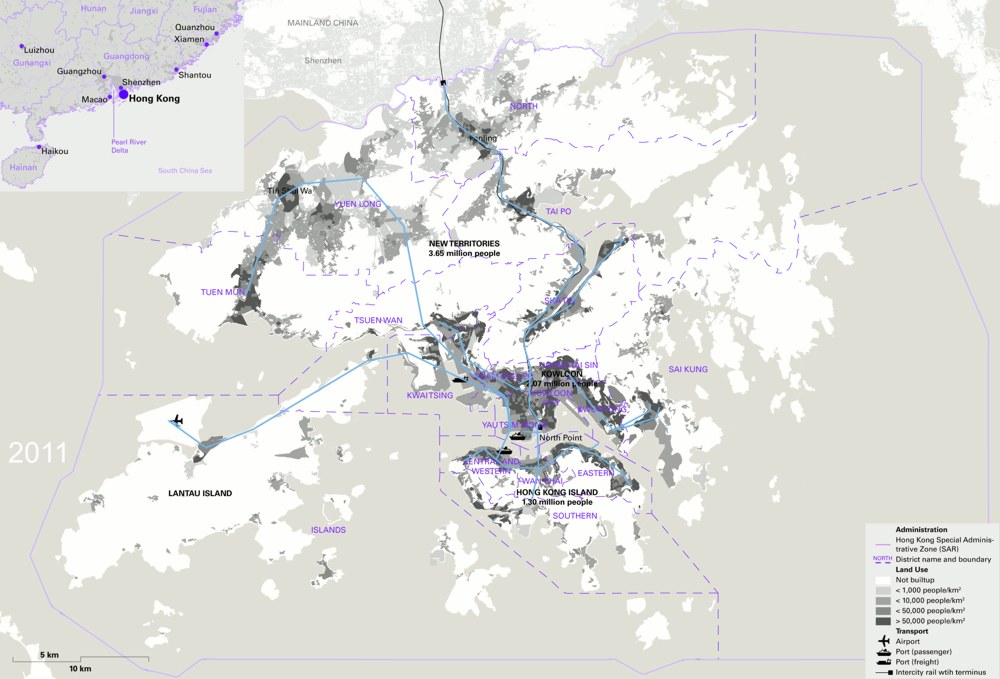
A few Quebec-Hong Kong comparisons


Road network

Quebec - Rural: 116,393 km (all roads, all jurisdictions)
Quebec - Urban: 28,310 km (all roads, all jurisdictions)
Hong Kong: 2,078 km
http://www.bv.transports.gouv.qc.ca/mono/0950935.pdf
http://www.aud.gov.hk/pdf_e/e57ch05.pdf

GDP
Quebec (2015):  $291,153,000 USD. Per capita: $35,252 USD
Hong Kong (2015): $308,877,550,000 USD. Per capita: $42,277 USD

Population
Quebec (2015):  8,259,500, Annual growth rate 0.5%
Hong Kong (2015): 7,324,800. Annual growth rate 0.8%


Population density


In blue is the mass transit network (MTR)


Aviation
Hong Kong Airport - Passenger (2015): 68,496,000
Hong Kong Airport - Air traffic movements (2015): 406,000


Hong Kong Airport - Passenger (2015): 16,623,438
Hong Kong Airport - Air traffic movements (2015): 238,523


Pollution


http://www.economist.com/blogs/graphicdetail/2016/08/daily-chart?fsrc=scn/fb/te/bl/ed/

Hong Kong doesn't have heavy industry, and has less cars than Montreal. Yet, more heavily polluted... thanks mainland China!

Monday, February 13, 2017

A few stats and data on abortion

https://www.guttmacher.org/news-release/2014/us-abortion-rate-hits-lowest-level-1973

"The number of abortions worldwide is declining due to increased access to contraception according to the World Health Organization"
https://en.m.wikipedia.org/wiki/Abortion_law


"In 2013, the majority (66.0%) of abortions were performed by ≤8 weeks’ gestation, and nearly all (91.6%) were performed by ≤13 weeks’ gestation. Few abortions were performed between 14 and 20 weeks’ gestation (7.1%) or at ≥21 weeks’ gestation (1.3%)."

"The neuroanatomical system for pain can be considered complete by 26 weeks' gestation. A developed neuroanatomical system is necessary but not sufficient for pain experience
Pain experience requires development of the brain but also requires development of the mind to accommodate the subjectivity of pain
Development of the mind occurs outside the womb through the actions of the infant and mutual adjustment with primary caregivers
The absence of pain in the fetus does not resolve the morality of abortion but does argue against legal and clinical efforts to prevent such pain during an abortion"
https://www.ncbi.nlm.nih.gov/pmc/articles/PMC1440624/


Saturday, February 11, 2017

If I were the Hong Kong C.E., here's what my pledges would be


Universal retirement protection scheme
Reduce road infrastructure costs and pollution
  • The growth of private car ownership needs to be contained (30% in 10 years). The mass-transit systems in Hong Kong are efficient, inexpensive, and will get anyone anywhere they want, or need. It is arguably the best in the world. More private cars means more roads, which are a waste of land use, and require ongoing maintenance.
    The idea would be to de-incentivize the purchase of private cars in Hong Kong and place them squarely as a luxury item, which they are.

    Private car First Registration tax to double. Payable at car purchase. This tax would also apply for cars privately purchased outside and brought in Hong Kong.
Private cars
      (a)   on the first $150,000
40% would be increased to 80%
      (b)   on the next $150,000
75% would be increased to 150%
      (c)   on the next $200,000
100% would be increased to 200%
      (d)   on the remainder
115% would be increased to 330%
  • Reduce Hong Kong vehicle fleet pollution. Vehicle annual licensing renewal fees ; increase for all, but modulated on particulate emissions. For example: for petrol private car smaller than 1500cc, the current fee is $3929/year. It would be changed to be modulated from $3929/year to $8000/year, depending on PM2.5 emissions. Furthermore, it would be mandatory for the fees to be displayed at the car dealership and on the sales agreement. The idea is that the transparent modulated fees would make private car buyers aware of the environmental and economical choice they are making at time of purchase, and promote the purchase of less polluting vehicles
    http://www.td.gov.hk/en/public_services/fees_and_charges/
  • Phasing out of ALL pre-EuroV vehicle by 2022 (5 years). http://www.hongkongcan.org/doclib/Hong_Kong_Commercial_Diesel_Vehicle_Fleet_consolidated.pdf
  • Particulate scrubbers installed in high-density areas and parks. New technology exists to effectively "scrub" the particulate pollution out of the air. This is not a replacement to pollution control but rather, a short-term mitigation measure. Such scrubbers should be installed in high-density areas (Mong Kok, Central, Causeway Bay) as well as parkshttps://www.theguardian.com/sustainable-business/2015/sep/19/worlds-first-smog-filtering-tower-on-tour-daan-roosegaarde-air-pollution
  • Mandate use of 0.1% sulphur fuel for ships within Hong Kong's waters, instead of the current 0.5% sulphur fuel
  • Equip ship berthing facilities with power capabilities so that less polluting sources can power ships when berthed
Protect Hong Kong's unique natural asset, its Country Parks


Make housing more affordable
  • Taxation of unsold new flat units as if they were sold, at twice the leasable taxable rate. The idea being to force developers to release flats to the market (thousands of flats currently) by making it less economically beneficial for them to keep unsold inventory. Thereby increasing supply.
  • Escalating stamp duty on land sold but not developed. Escalation doesn't stop if land development rights are resold. 1x first year, 3x second year, 5x 3rd years, 7x 4th year
  • Increase 30% of plot ratios density. Minimum ratios implementation
  • Immediate termination of small house policy with compensation of public flat, or $1mil, at impacted individual's choice
Advancement of democracy in Hong Kong as allowed by the One-Country, Two systems framework
  • Re-open talks with Beijing on universal suffrage with goal of CE elected through universal suffrage